|
Tan Guan Yuan I am a 2nd-year PhD candidate at Monash University, focusing on 4D reconstruction and physics simulation. My goal is to build intelligent systems that perceive physical properties and causal rules from visual data, paving the way for cognitive digital twins. I am currently exploring research internship and visiting researcher opportunities for 2026. I welcome collaborations on 3D/4D vision, neural rendering, and physics-informed learning. |

|
Selected Publications |
|
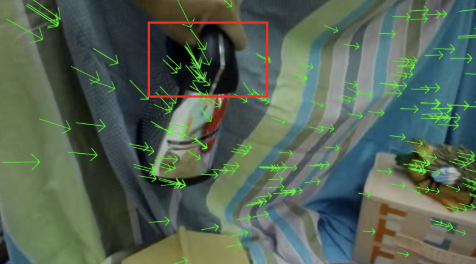
FLAG-4D: Flow Guided Local-global Dual-deformation Model for 4D Reconstruction
Guan Yuan Tan, Ngoc Tuan Vu, Arghya Pal, Sailaja Rajanala, Raphael CW Phan, Mettu Srinivas, Chee-Ming Ting AAAI 2026 (Accepted) paper / code / project page Introduces a dual-network architecture that decouples local fine-grained deformation from global motion dynamics using optical flow guidance. This approach resolves the conflict between detail preservation and temporal coherence in dynamic scene reconstruction. |
|
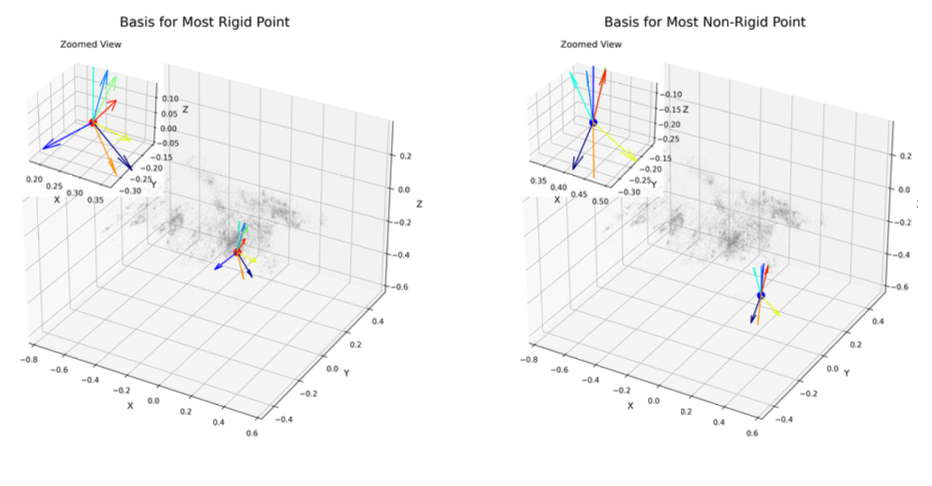
Learning a Spatially-Varying Motion Basis for 4D Reconstruction
Guan Yuan Tan, et al. Under Review A framework that factorizes complex non-rigid motion into a learnable, spatially-varying basis set. This disentanglement of geometry and motion enables real-time rendering (>160 FPS) and extremely fast training (<18 mins) while maintaining high fidelity. |
|
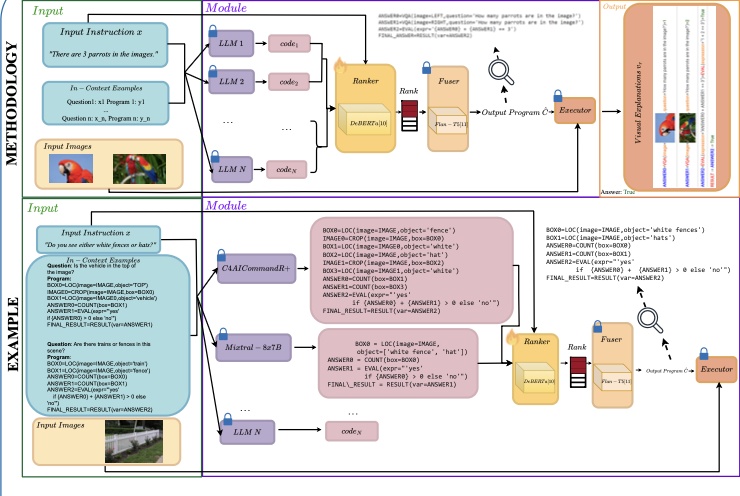
Herald: Democratizing Compositional Reasoning for Visual Tasks without Any Training
Guan-Yuan Tan, Arghya Pal, Sailaja Rajanala, Raphaël C.-W. Phan, Chee-Ming Ting APSIPA ASC 2025 project page / code / paper A mixture-of-experts framework that orchestrates open-source LLMs to generate executable Python code for complex visual tasks. Herald achieves SOTA accuracy on various benchmarks without any model training or fine-tuning. |
|
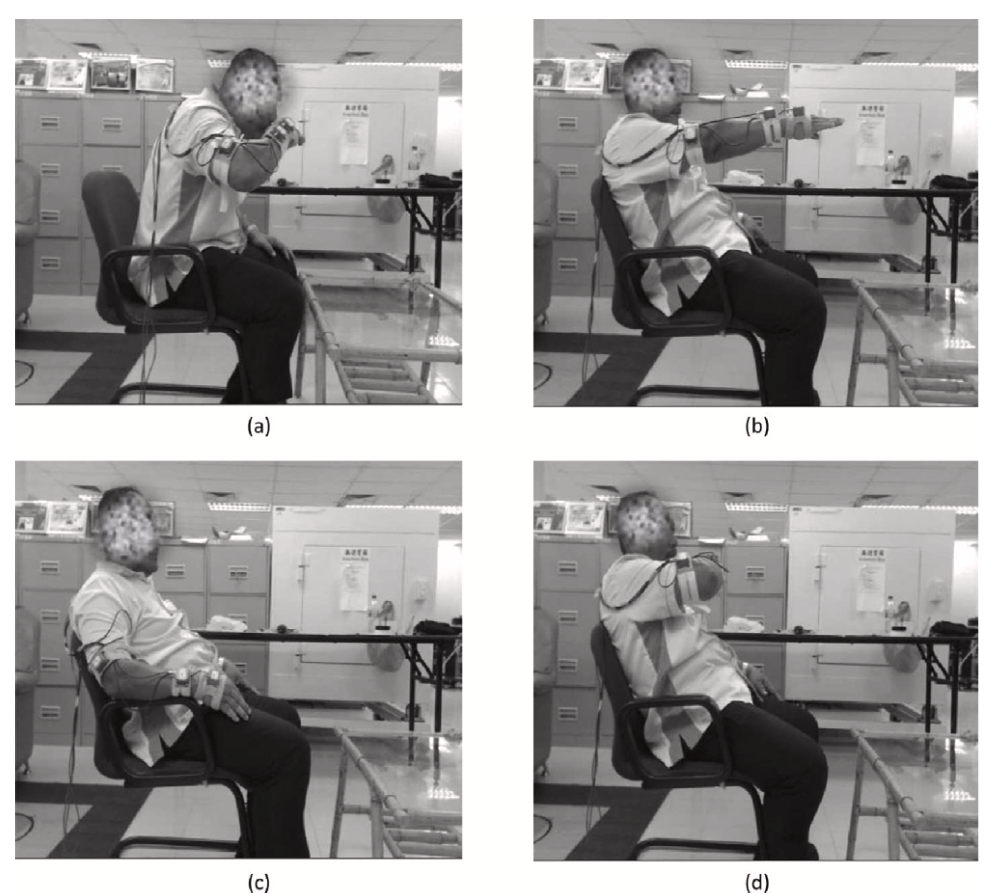
Parkinson's disease tremor prediction towards real-time suppression
Guan Yuan Tan, A.S.M. Bakibillah, Ping Yi Chan, Chee Pin Tan, Surya Nurzaman Computers in Biology and Medicine, 2025 paper Proposes a self-attention deep temporal convolutional network (SADTCN) to predict non-linear tremor signals, enabling accurate, real-time active suppression for Parkinson's patients. |
Teaching |

|
Teaching Assistant, Monash University
|
|
Design: Jon Barron. |